Think about everyone who will write for your brand this week, and what each of them is working from. The answers rarely match.
The in-house team. An agency on a new campaign. The freelancer behind the newsletter. A market team adapting everything for Germany. The UX team writing the app. And more and more of them using AI to help, whether the brand has planned for it or not.
Why every writer gets a different brief
The agency has a tone-of-voice PDF from a few years back. The freelancer has a deck someone forwarded. The market team has its own translation of the guidelines, with local rules added over time. The UX team has a Slack thread. The AI has whatever was pasted into it that morning.
Each of them is doing good work with what they were given. But every brief differs a little, and each writer fills the gaps a different way. Across a year of output the difference becomes audible: the brand sounds like a slightly different company depending on who wrote the piece.
The brand team absorbs the cost. It answers the same questions again, rewrites the agency's first draft and catches the product name spelt three ways. The work is skilled and patient, and nearly all of it happens after the words are written.
One reference for every writer
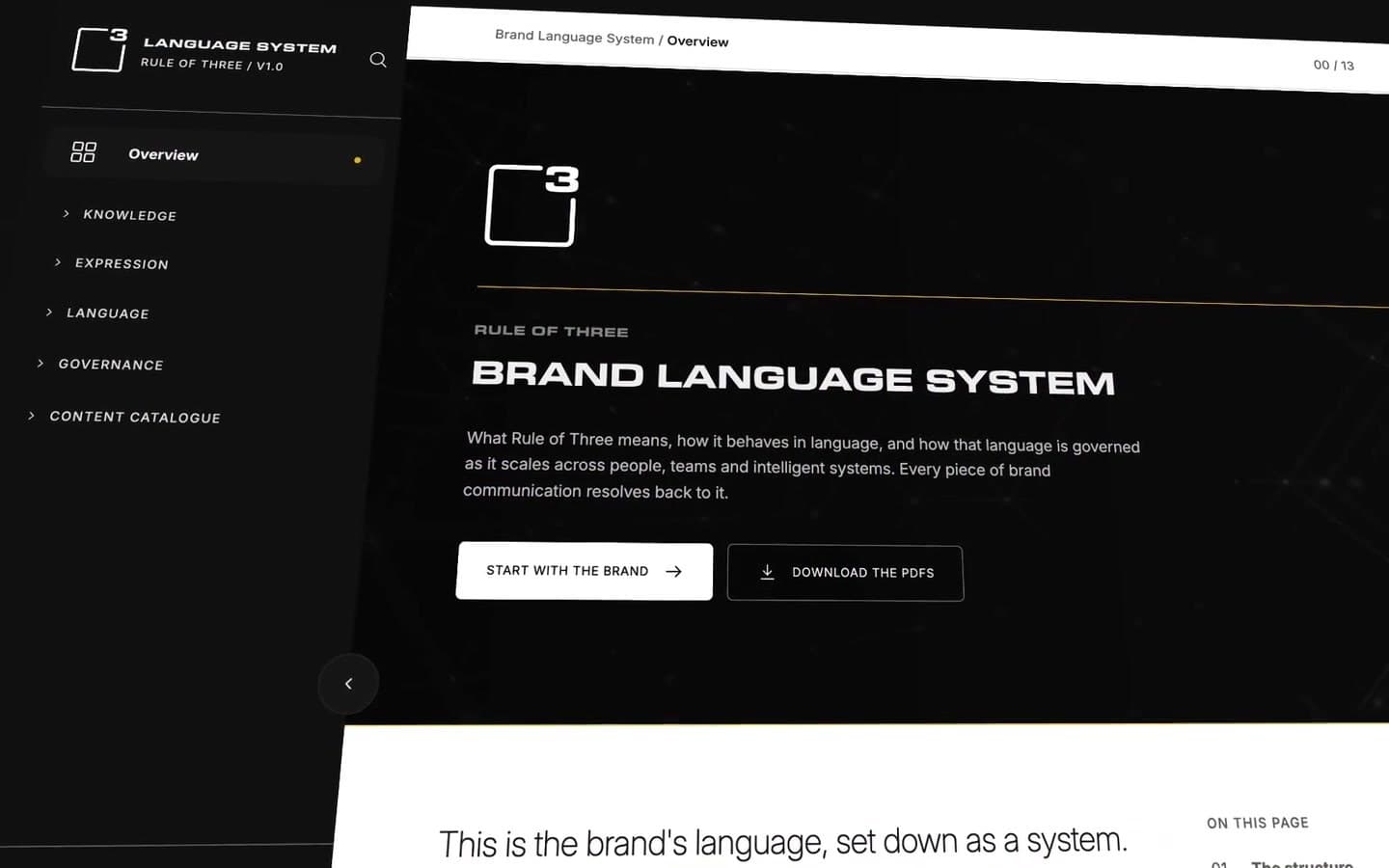
A Brand Language System moves the brief to a single source. Every writer, inside the business or outside it, works from the same reference: the brand's meaning, its voice and how it flexes, its vocabulary and conventions, and who decides what. It sits in one place, designed in full.
For writers outside the business, the Content Catalogue makes the biggest difference. Every content type the brand produces is there, shown through a live example annotated to explain its structure. An agency writing its first product page for the brand can see how one is built, section by section, before it starts. A freelancer can open the newsletter and see what it is meant to do.
A tour of the Content Catalogue in a Brand Language System, moving through content types, each shown as a live example with annotations explaining its structure.
The small questions are answered in the same place. How are dates written? Is it "sign in" or "log in"? How are bullet points formatted? What is the premium tier called? A search returns the answer, and everyone gets the same one.
Because the system belongs to the brand, held outside any tool and downloadable in full, it travels: to a new agency on its first day, into a market team's onboarding, or to a partner working with the brand for the first time.
What changes for the brand team
When every writer starts from the same reference, the brand team's work shifts. Less of it goes on correction after the fact, and more on the decisions only the brand team can make: what the brand means, what it will and will not say, and how the system should develop as the brand does.
Onboarding gets lighter too. A new writer no longer has to absorb the brand from the people who have been there longest. It is written down, shown, interactive and searchable from the first day.
AI as one more writer
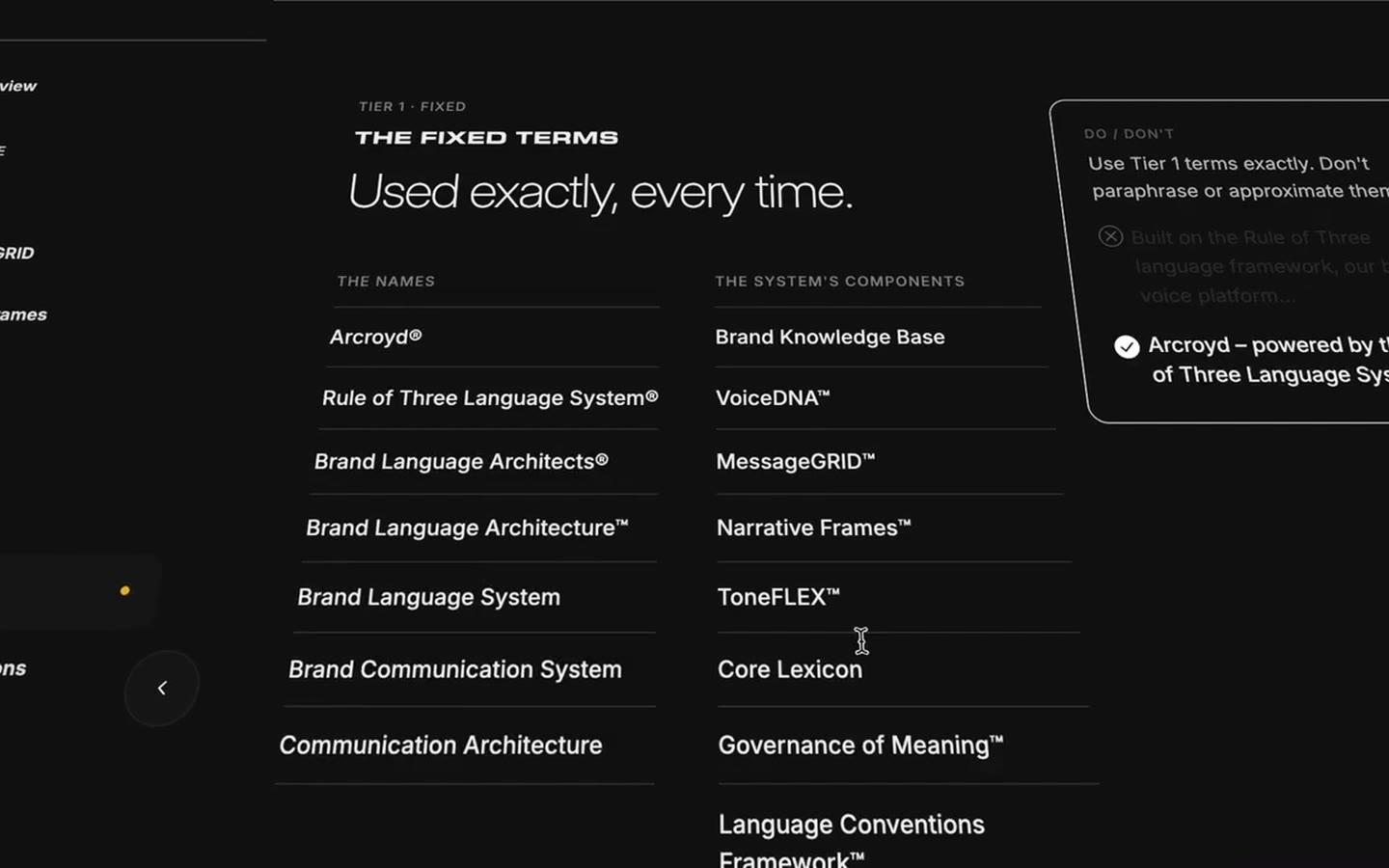
AI is another writer in the same line. It needs what every other writer needs: the whole brand, set down clearly. Arcroyd®, the brand's own AI, is built from the Brand Language System in the same environment, so what a team reads is what Arcroyd writes.
AI needs what every other writer needs: the whole brand, set down clearly.
For years the brief has been the weakest link in brand language. Each writer received a fragment and invented the rest. Give every writer the whole brand, and the voice begins to hold on its own.