Bold. Human. Clear. Most tone-of-voice guides come down to a short list like this, and the list was never as much help as it looked.
Why three adjectives were never enough
A list of traits describes a voice without saying how to use it. A capable writer can work with that for a while. Ask the same list to carry a product page, a board paper and a reply to an unhappy customer, and the gaps show quickly, with each writer filling them differently. Hand the list to an AI tool and the model's training fills them instead, which means every other brand's language.
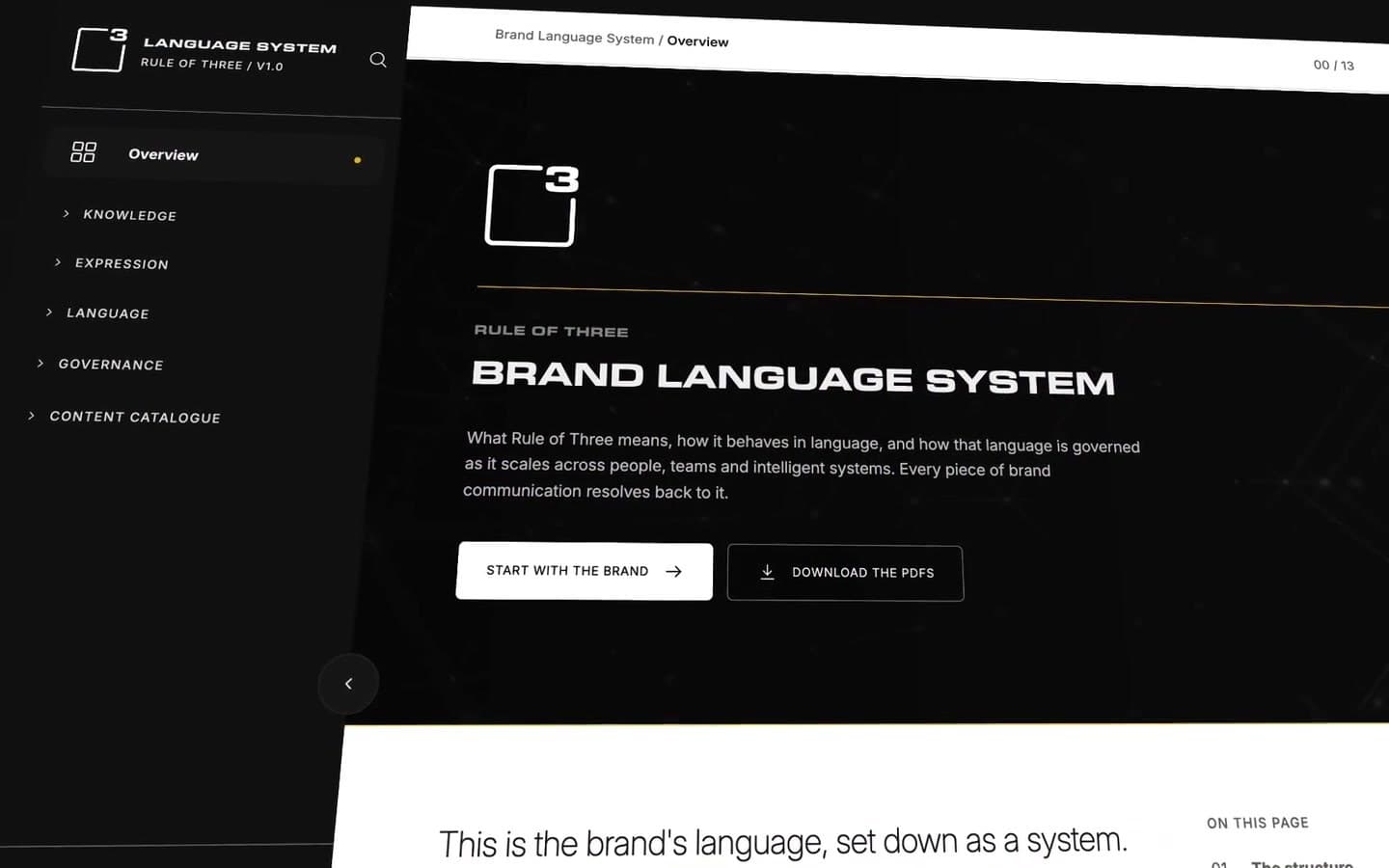
A Brand Language System takes each part of the guide and designs it in full. This is what changes, part by part.
A tour through the sections of a Brand Language System: knowledge, expression, language, governance and the content catalogue.
Knowledge: what must stay true
The usual guide opens with a page on what the brand stands for, written to inspire. In the system, that page becomes the brand's knowledge, set down in depth: what the brand means, what it offers, the claims it can make and the boundaries it keeps. These are fixed points. When a writer or an AI needs to describe a product, the approved answer is already there, well worded, so no one has to rebuild the brand from memory before writing a line.
It can sound like administration. In practice it frees the writing. With the substance settled, the effort goes into making the work good.
Expression: a voice designed in detail
The voice is where the distance between guide and system is greatest. The adjectives become a full account of how the brand behaves: what it leads with, how it handles complexity, when it lands a point and when it leaves room.
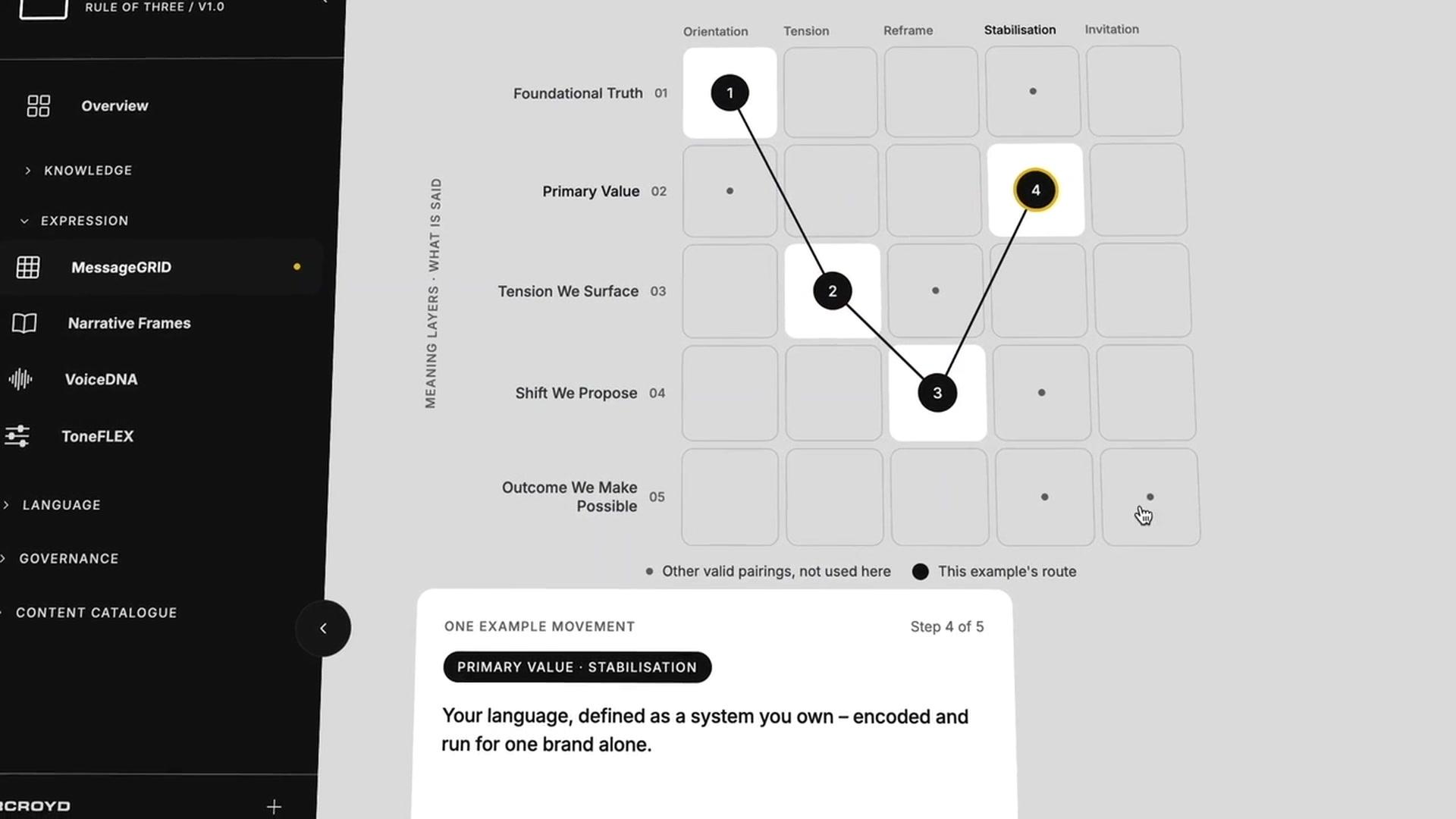
The system also orders meaning: what carries the most weight, what holds in every piece and what can move with the moment. It maps the narrative a piece follows, from establishing context to inviting the reader in. And it designs how the voice flexes, lighter in a social post, fuller in a board paper, and recognisably the same brand in both.
Language: the brand's vocabulary
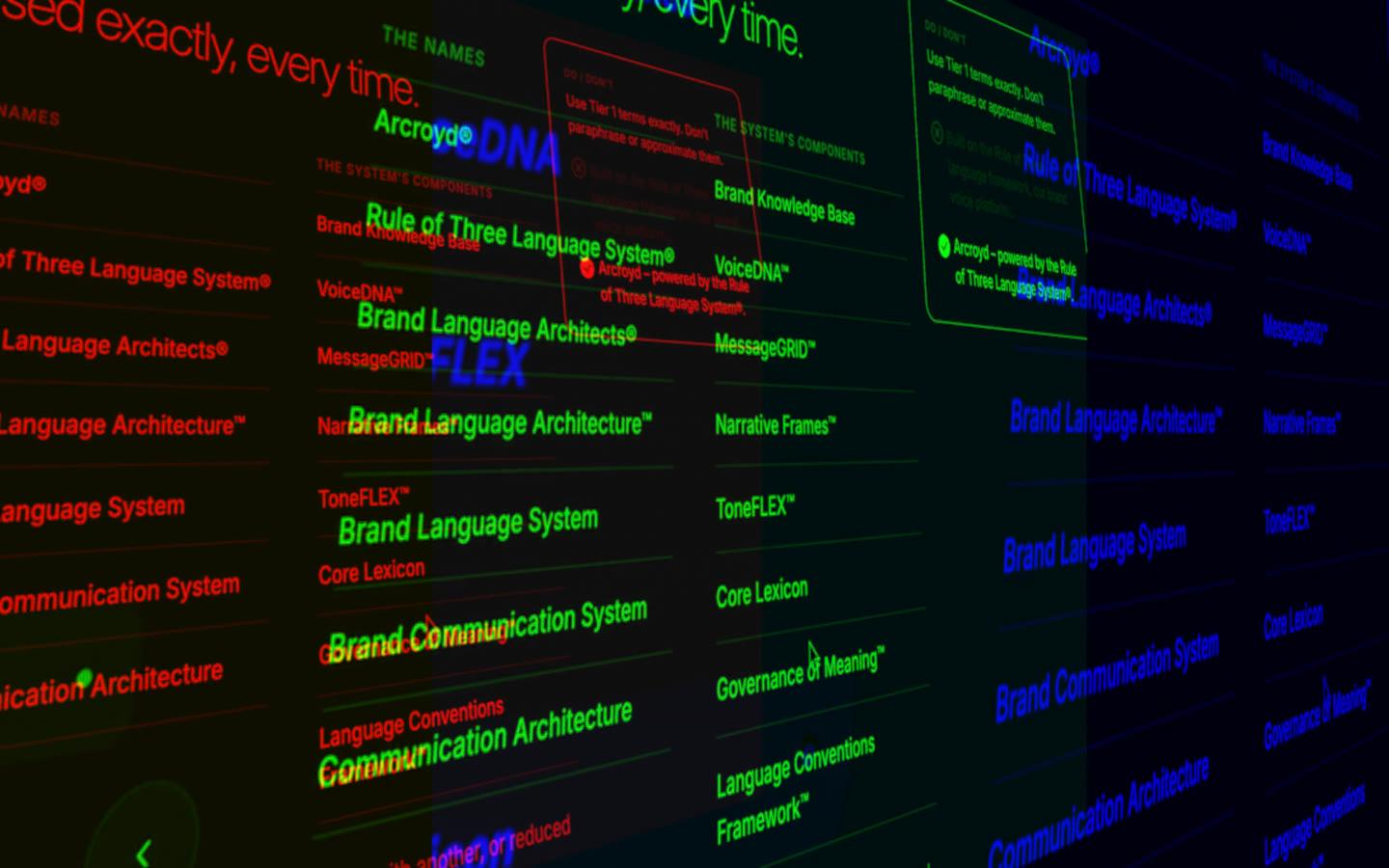
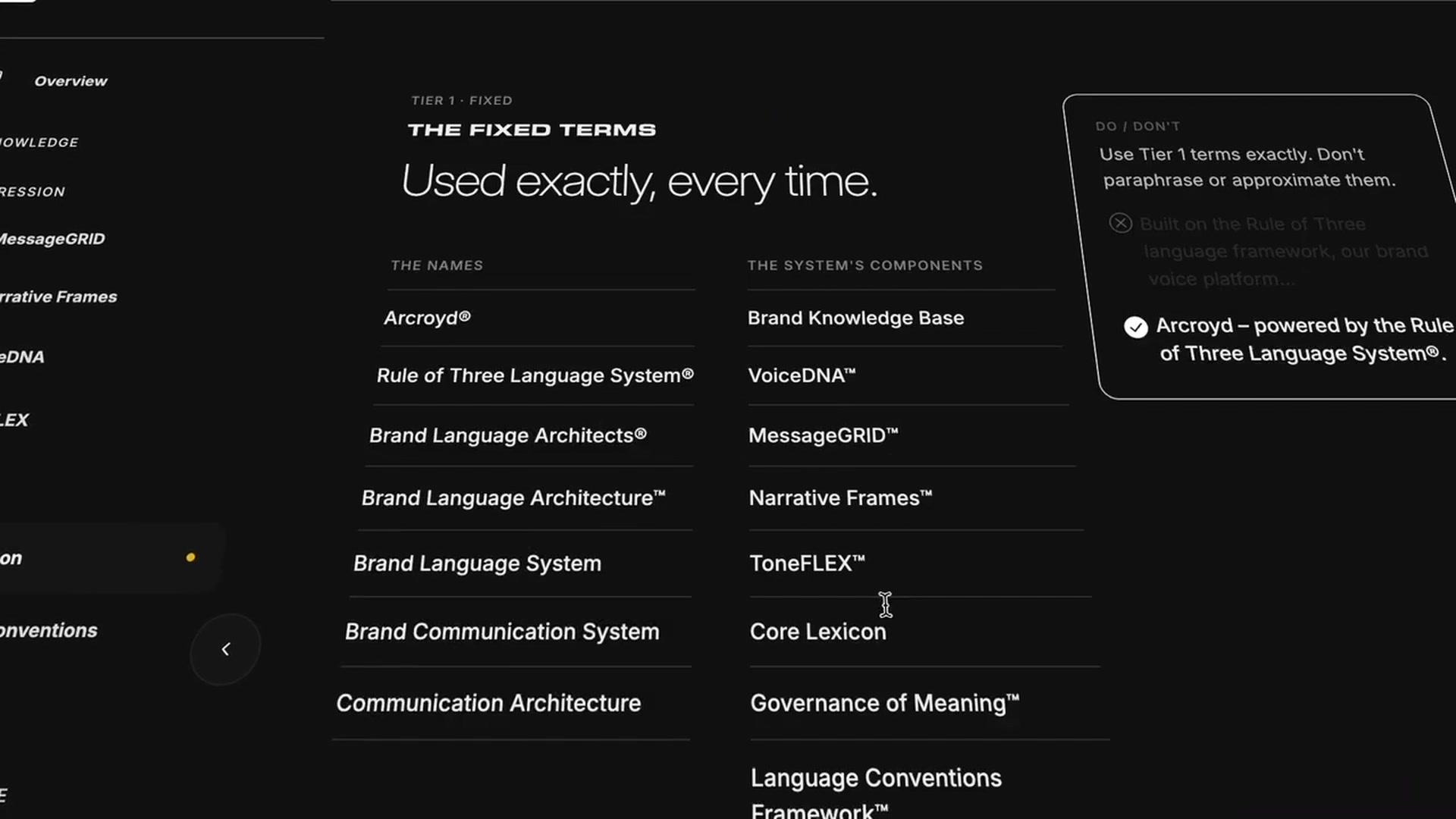
Beside the voice sits the brand's vocabulary. Some words are fixed and used exactly, every time. Some can move within set limits. The rest are open. The system marks which is which, along with the conventions every line follows, down to how a date is written or a bullet point formatted.
Governance: decided before anything is written
In most organizations, governance means a senior person reading the pieces that matter and catching what slips. That holds while the volume is manageable. AI has changed the volume.
The system sorts every decision about the brand's language into one of three kinds. Decisions about meaning stay with the brand's people. Decisions about tone are set by people and applied by others, AI included, within limits. Execution, the drafting and reshaping, can be handed over freely.
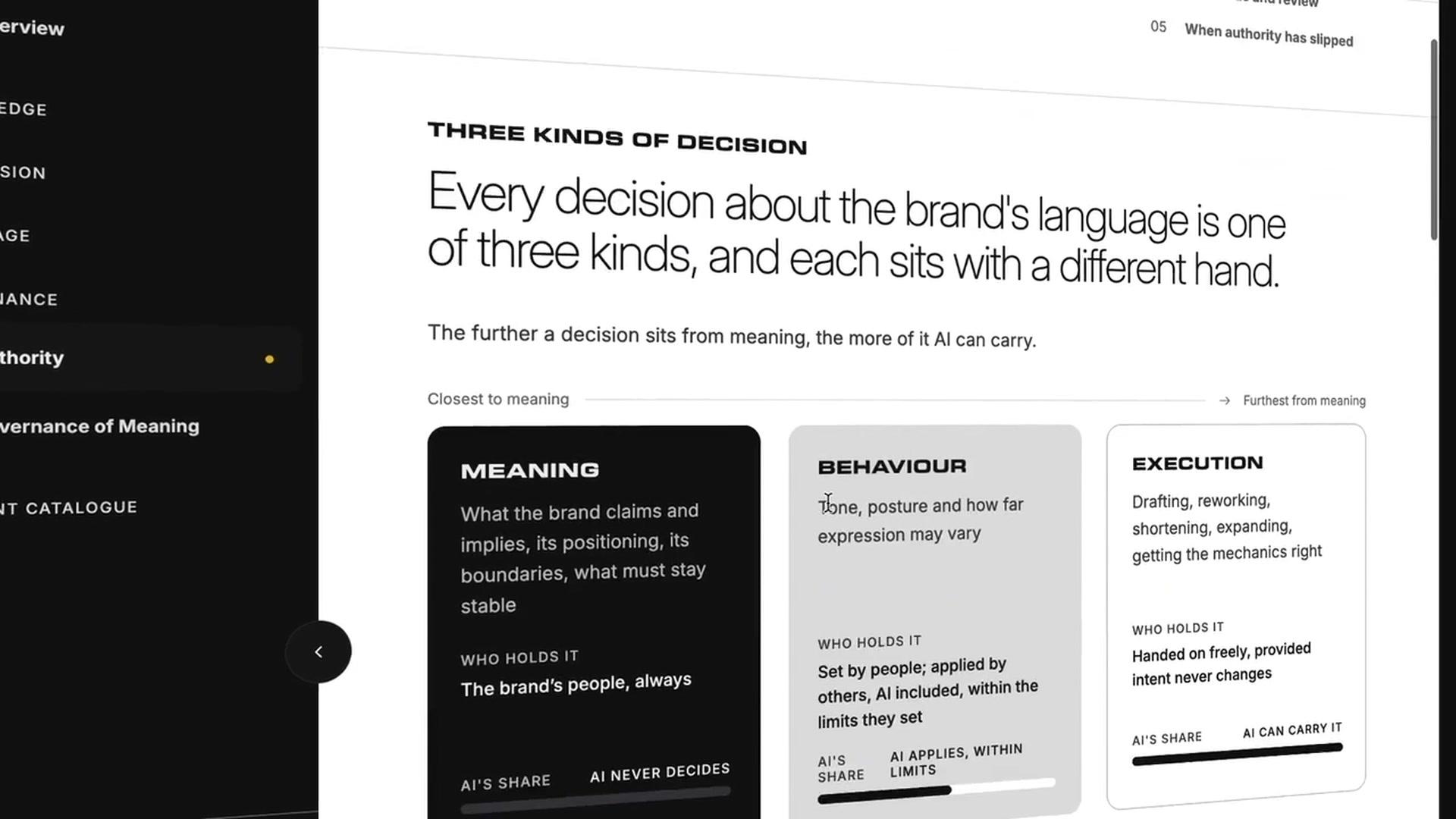
Ownership is settled before a word is written. That is what makes it safe for more people, and AI, to create.
Ownership is settled before a word is written.
Every content type, shown
The part teams return to most replaces the guide's do's and don'ts. The Content Catalogue holds every content type the brand produces, each with its structure, its register and a live example annotated to explain it. A writer starting a white paper can see how this brand builds one, section by section, and why each section is there.
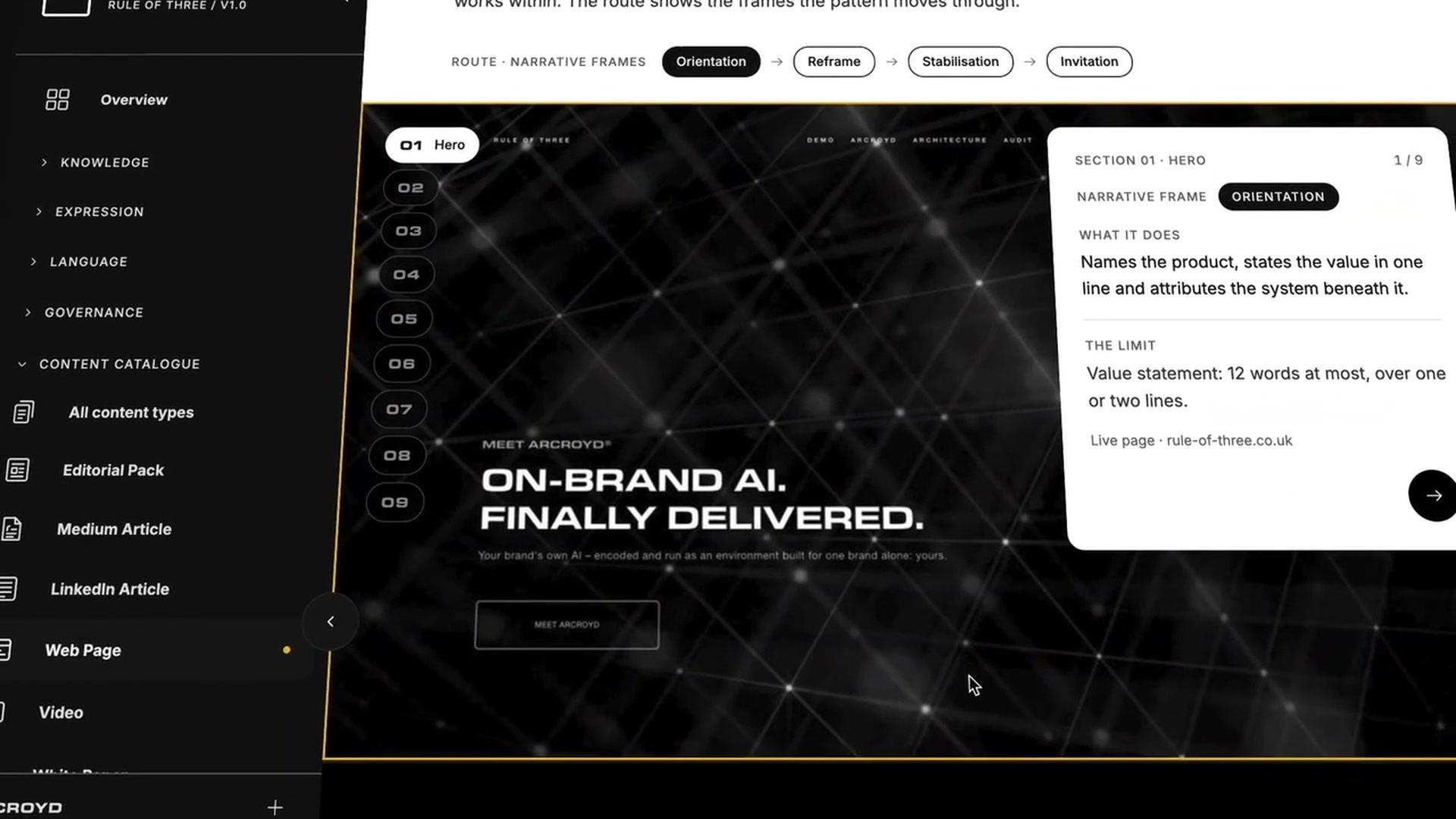
This is where the depth pays back. Each content type is the whole system put to work on a single job.
One system, read by people and AI
Together, the parts hold the brand's language in full. Every team can read and search it, it downloads in full, and it belongs to the brand. Because it is designed to this depth, an AI can work from it too. Arcroyd®, the brand's own AI, is built from the Brand Language System, so what a team reads is what Arcroyd writes.
The adjectives are still at the centre. Now they have the depth and substance to stand on.