WHAT WAS YOUR BRAND WORTH THIS MORNING?

Most organizations treat brand language as a matter of style. It is closer to a matter of value, one now drawn down daily by people never told they held it.
THE MOST EXPENSIVE MISREADTell a brand leader that AI content is moving off brand, and the response is almost predictable. They agree it is a problem. They file it under things the content team should tidy up: better briefs, a little more review, something to address next quarter. The instinct is understandable, and it is the most expensive misread there is. The drift is already reaching the most valuable thing the organization owns, and almost no one in the building is treating it that way.
AN ASSET MADE OF WORDSA brand is among the most valuable assets an organization holds. It earns trust, it allows a price above the unbranded equivalent, and it carries a large share of long-term worth. This is well understood; it is why brands are valued in acquisitions and defended in court. What gets missed is where that value sits. A great deal of it lives in language: in what the brand says, how it says it, and the meaning customers have built around both over years.
A STANDARD THE WORDS NEVER GETThe other half of the brand is protected without question. No one would let an untrained colleague stretch the logo, recolour it, set it in the wrong typeface and send it to a customer before lunch. It would not happen. There are guidelines, there are gatekeepers, there is a designer who would quietly catch it. The words carry as much of the brand, and they go out all day with almost none of that care.
WHEN THE ASSET SLIDESSo when the language slides toward the generic middle, the asset slides with it. A brand that sounds like every other brand in its category is worth less than one that sounds like itself, and it can command less for the same reason. The erosion does not stop at the copy. It runs all the way to the thing the brand is valued for.
“A BRAND THAT SOUNDS LIKE EVERY OTHER BRAND IN ITS CATEGORY IS WORTH LESS THAN ONE THAT SOUNDS LIKE ITSELF.”DEPOSIT OR WITHDRAWALEvery piece of content an organization publishes is either a deposit or a withdrawal against its brand equity. Written on-brand, a piece adds to the account, reinforcing what customers already believe and leaving the brand a fraction stronger. Written off-brand, it draws the account down, teaching the market a looser, blander version of who the brand is, and that version sticks. For years the balance stayed positive, because trained people wrote most of what went out. That safety is gone.
“EVERY PIECE OF CONTENT IS EITHER A DEPOSIT OR A WITHDRAWAL AGAINST BRAND EQUITY.”NO ONE HOLDS THE LEDGERThe highest-volume producers of content have become the single biggest influence on the most valuable asset. For many, content is not really their job; most are the least equipped to protect it, and almost none were ever told that is what they were doing. No one explained that the words they publish are part of what the company is worth. So the asset is revalued every day, in thousands of small acts of writing, with no one named to hold the line and no ledger anyone is watching.
“THE ASSET IS REVALUED EVERY DAY, WITH NO ONE NAMED TO HOLD THE LINE AND NO LEDGER ANYONE IS WATCHING.”TWO VIEWS OF ONE GAPSeen from operations, someone is carrying a responsibility no one ever framed as theirs. Seen from the brand, the most valuable asset is being reshaped daily by a function no one quite controls. Two people, looking at the same gap from opposite sides, often without saying it aloud. None of it arrives as a crisis. There is no terrible quarter, no single post that sinks the brand. It stays quiet, which is exactly why it can run for years before anyone names it.
WHAT IT IS WORTH NOWAn asset most organizations would fight to protect in a contract is being spent, a little at a time, by people who were never told they were holding it. The slow drift was the symptom. This is what it costs. Tidy copy is the least of it. The real question is whether anyone can still say what the brand is worth this morning, after everything that went out in its name.
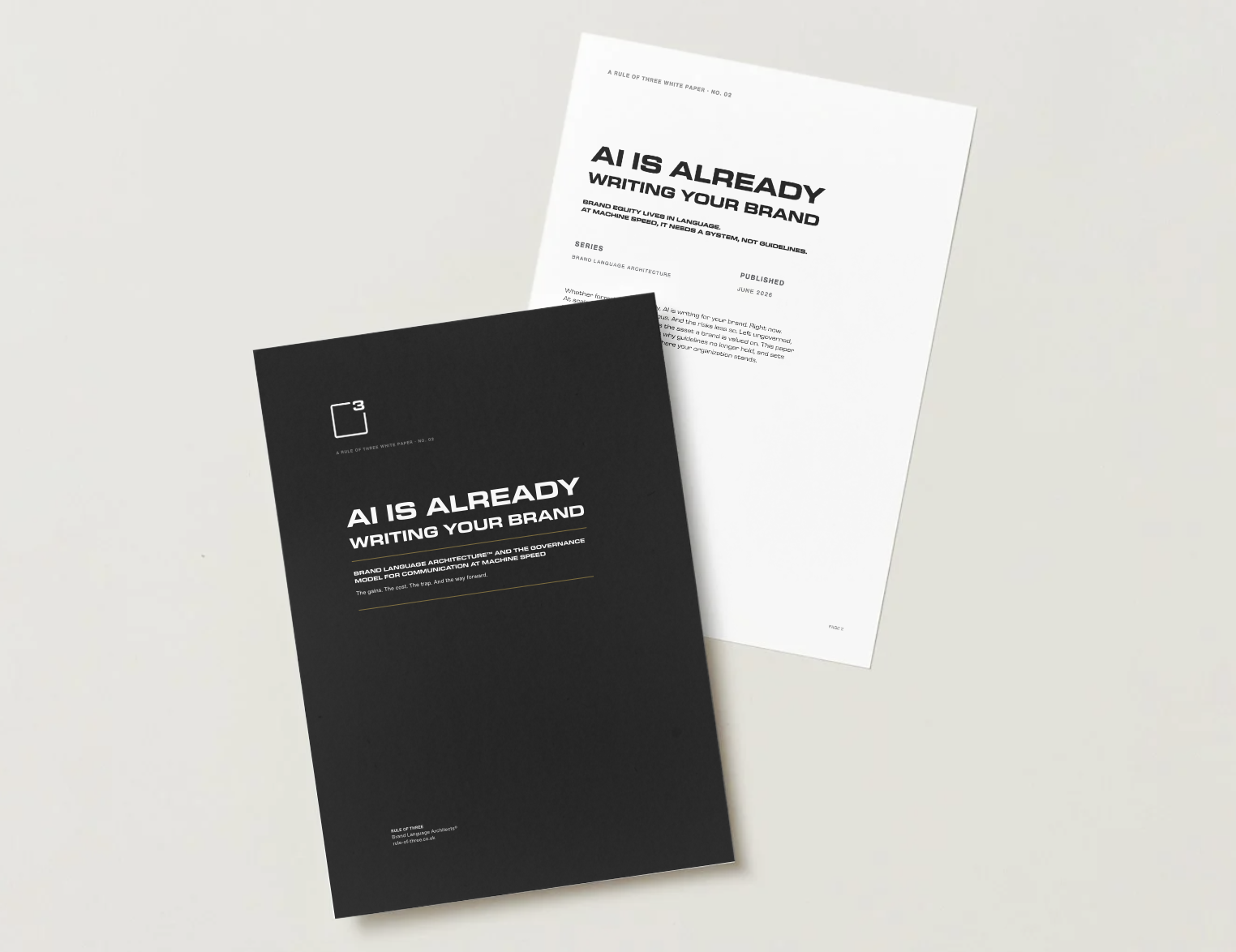
Download the white paper: AI Is Already Writing Your Brand
WHITE PAPER NO. 02: AI IS ALREADY WRITING YOUR BRAND Whether formally or informally, AI is writing for your brand today, at scale. This paper examines the exposure, explains why guidelines no longer hold, and sets out the structured way to see where your organization stands.
FURTHER READINGExplore the FAQ – the core definitions of Brand Language Architecture™.
LET'S TALKThis is the work we've been designing for – systems that give organisations the structure to communicate with clarity in the age of intelligent communication.
Interested in exploring these ideas further?
