Ask a language model to describe a product and count the adjectives. More often than not, there are three.
Count the benefits that follow, and the bullet points under them. The pattern repeats so reliably that editors and teachers now treat it as a giveaway. A paragraph that lands every point in a neat trio reads, more and more, as a paragraph nobody wrote.
For a practice named after the rule of three, this is an interesting turn. The device is one of the oldest in rhetoric, and it has served speakers and copywriters for about as long as either has existed. What has changed is who is using it, and why.
Why language models write in threes
A language model learns to write by reading. Its training text is human writing at enormous scale, and human writing is full of triads: the slogans and speeches that lasted, "faster, higher, stronger", "inform, educate, entertain". The rule of three is everywhere in what people have written, so it is everywhere in what models have learned.
Three also reads as finished. It is the smallest number that forms a pattern, which gives a sentence a beginning, a middle and an end. Models are refined on responses that people rate as clear and complete, and a trio sounds complete before anyone has checked whether it says anything.
Put those together and the triad stops being a choice. It becomes the default shape of an answer, reached for whether or not the idea has three parts.
How the rule of three became a sign of AI writing
Ask people what gives AI writing away and the same features come up: the reflexive "it's not this, it's that", an em dash in every other sentence, a fondness for certain words, and lists of three. Wikipedia's article on the rule of three now records the last of these. Large language models use the device often, it notes, and overuse it with adjectives, so the writing feels full and lacks depth.
That observation is the useful one, because the trouble shows up in the third item. "Fast, reliable and seamless." "Clear, consistent and compelling." Read lines like these closely and the third word is often doing no work at all. The third word arrives to complete the shape. Often there was no third thing to say.
The third word arrives to complete the shape. Often there was no third thing to say.
Human writers make the same move, and always have. A tired copywriter on a deadline reaches for a triad too. The difference is scale. A model makes the move in every answer, for every user, and the result is a vast amount of text with the same rhythm and the same padding, from writers who have never met.
What the habit says about a brand's voice
The triad is only the most visible symptom. A model that has read everyone's language reaches for the most common shape in all of it, and the same pull works on everything else: the words it chooses and the way it builds a paragraph. The most common shape belongs to no one.
For a brand, that pull has a direction. Every piece written this way moves a little closer to the middle of its category, and the middle is where a brand is hardest to recognize. Distinctiveness is where brand value sits, so the drift is a commercial matter. The more a team creates with generic AI, the further the voice travels.
Telling teams to watch for triads won't fix it. Strip out the threes and the model reaches for the next most common shape. What holds a voice is a definition of the voice itself, set down precisely enough for a model to apply: the words the brand uses, the rhythm it writes in and the shapes it reaches for.
Three, by design
A designed voice treats the triad like any other device: something the brand decides, and writes down. Its definition sets out how the brand sounds and what it leaves out, down to which devices it uses and when. Because that definition is written down, it holds whoever is writing, a person or a model. Nobody has to remember it.
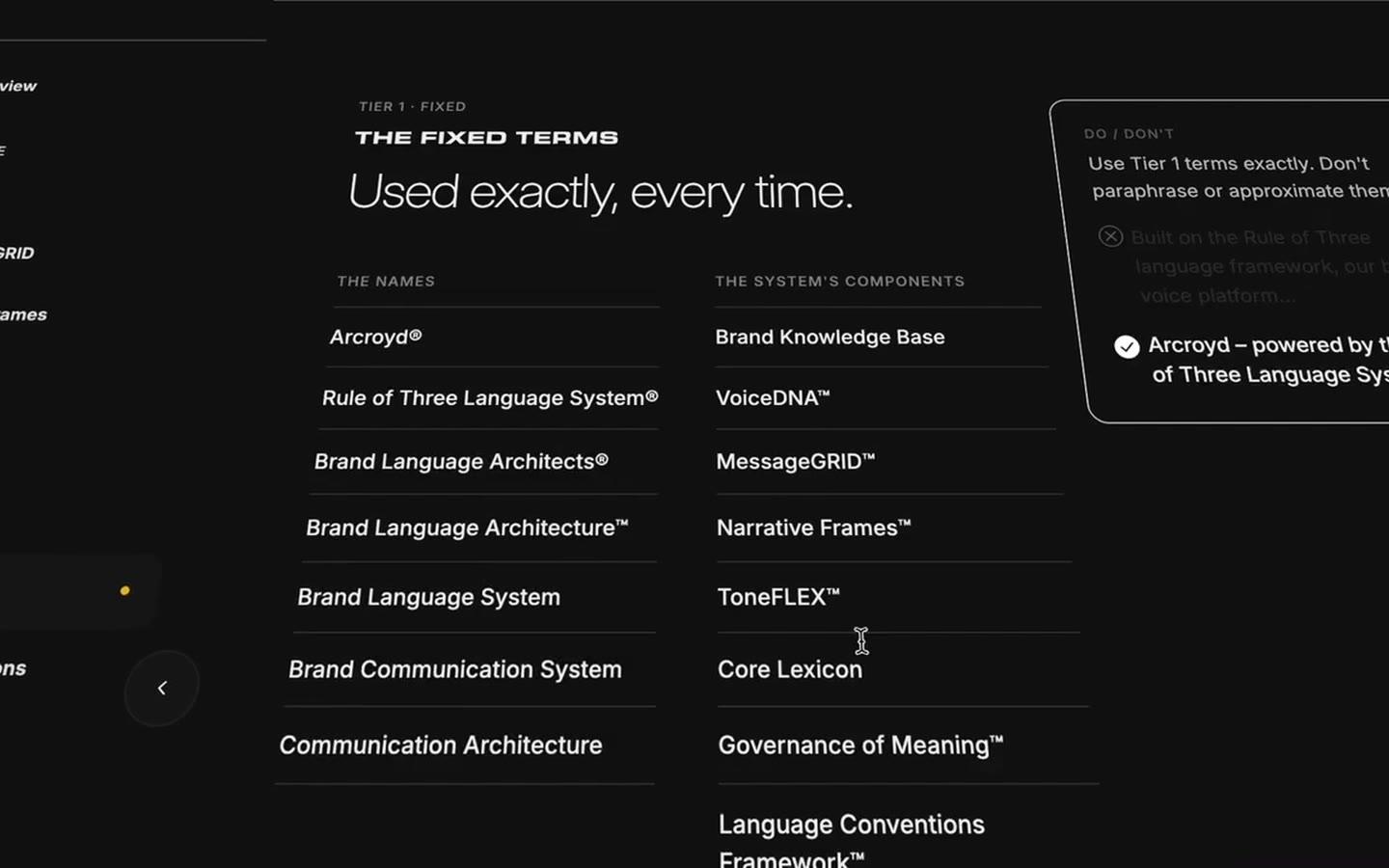
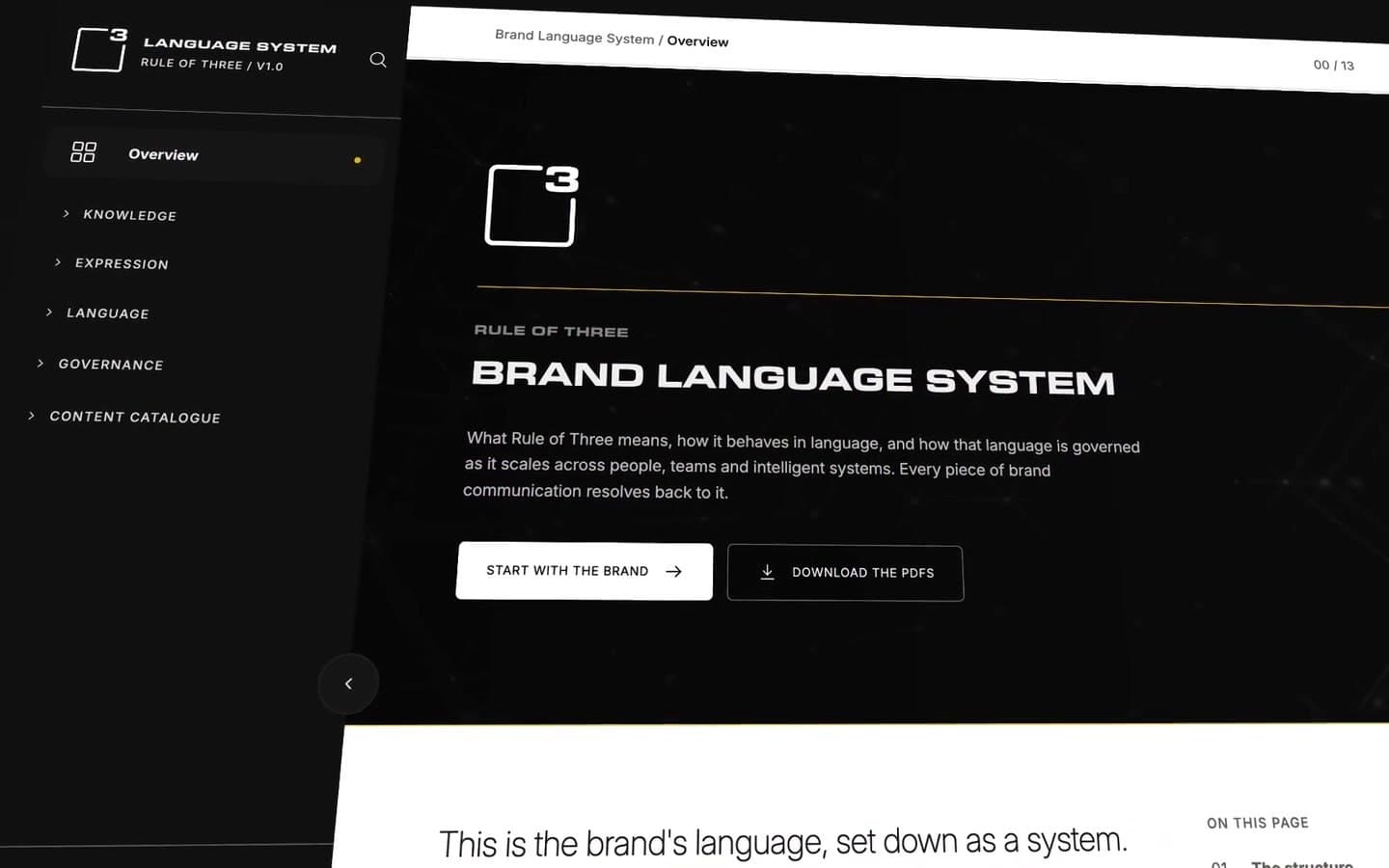
That is the principle behind Arcroyd®. Most AI writing tools start with the model and ask the brand to fit inside it. Arcroyd starts with the brand, defined as a system the brand owns, and builds the AI from that, so the shapes it reaches for are the brand's own.
The rule of three worked for centuries because someone chose it: a speaker who knew the line had to land, a copywriter who knew the slogan had to be carried home. AI writes in threes because nobody is choosing. Give it a voice that has been designed, and the choice comes back.